Basic Info
Model NO.110-XXXXXX
Driving TypeSliding Armature
Control SystemElectromagnetic-Operated
DC FormPermanent Magnet Starter Motor
MaterialAluminum
Current TypeAlternating Current
Compatible VehiclesFamily Cars
MOQ20
Transport PackageIndivisual Carton
TrademarkCustomization
OriginChina
Production Capacity50000PC/Year
Product Description
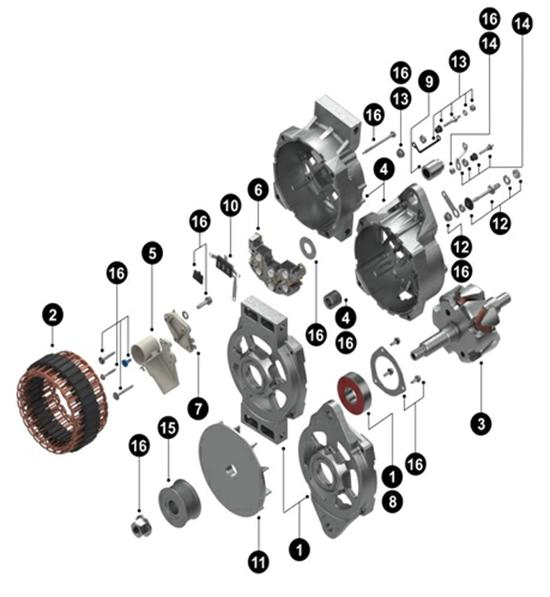
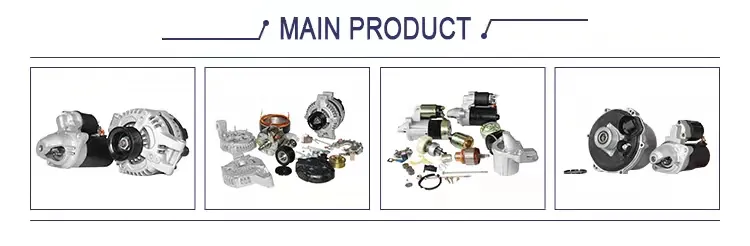
Alternator, source of direct electric current in modern vehicles for ignition, lights, fans, and other uses. The electric power is generated by an alternator mechanically coupled to the engine, with a rotor field coil supplied with current through slip rings, and a stator with a three-phase winding. A rectifier converts the power from alternating to direct form. A regulator ensures that the output voltage is properly matched to the battery voltage as engine speed varies.
Structure
- Rotor: Consists of a coil of wire wrapped around an iron core. It generates a magnetic field when current passes through.
- Stator: Fixed sets of coils surrounding the rotor that induce alternating current.
- Rectifier: Composed of six silicon diodes that convert three-phase alternating current into direct current.
- Voltage Regulator: Monitors battery voltage and adjusts the field current to maintain output stability.
Working Principle
When the engine starts, the battery provides current to the alternator's rotor, establishing a magnetic field. As the engine runs and the pulley rotates, the magnetic field of the rotor cuts through the stator windings, generating an alternating electromotive force. The rectifier then converts this into direct current to power vehicle devices and charge the battery.
Functions & Advantages
- Power Supply: Supplies electricity to all components like lights and navigation systems.
- Battery Charging: Replenishes energy consumed during starting.
- Fuel Efficiency: Improves fuel economy by stabilizing power supply and reducing engine drag.
- Design: Automotive alternators are smaller, lighter, and more durable compared to traditional DC generators.
Frequently Asked Questions
What is the primary function of an automotive alternator?
The alternator acts as the main power source for the vehicle while the engine is running, supplying electricity to components like lights and radios, and charging the battery.
How does an alternator differ from a DC generator?
Alternators are lighter, more compact, simpler in structure, and offer better performance at low engine speeds compared to traditional DC generators.
Why is the voltage regulator important?
The voltage regulator monitors battery voltage and adjusts the magnetic field strength of the rotor, ensuring the output voltage remains within a safe and consistent range.
Can an alternator improve a vehicle's fuel efficiency?
Yes, by providing a stable power supply, the alternator reduces the load on the engine, thereby helping to improve fuel efficiency and lower emissions.
What does the rectifier do?
The rectifier uses silicon diodes to convert the three-phase alternating current (AC) generated by the stator into the direct current (DC) required by the vehicle's electrical system.
 DCI Autos