Why is EV component manufacturing the future? The answer is visible on factory floors: battery cells move through automated lines, copper windings fill electric motors, and power electronics control energy use. The International Energy Agency’s Global EV Outlook 2024 reported nearly 14 million electric car sales in 2023, around 18% of global car sales. It expected sales to approach 17 million in 2024. That growth creates demand for batteries, inverters, motors, charging systems, and precision parts.
The scale-up is already measurable. The IEA reported that demand for batteries in the energy sector rose by 40% in 2023, reaching about 750 gigawatt-hours, with electric vehicles accounting for most of it. IEA Executive Director Fatih Birol said, “The growth in electric car markets is remarkable, and we are confident that the momentum will continue.” His comment concerns the vehicle market, not a promise that every supplier will succeed. That distinction matters.
For manufacturers asking “what is the future of electric vehicle component manufacturing,” the opportunity lies in reliable production, better battery performance, and adaptable supply chains. It also means tighter quality control: a small defect in a cell or connector can halt an entire line. Yet growth is uneven, and raw-material costs, skilled-worker shortages, and concentrated supply networks remain real constraints. The future looks promising, but not automatic. Companies that invest in engineering and traceability may be better placed to meet demand; others may discover that scaling quickly is harder than it sounds.
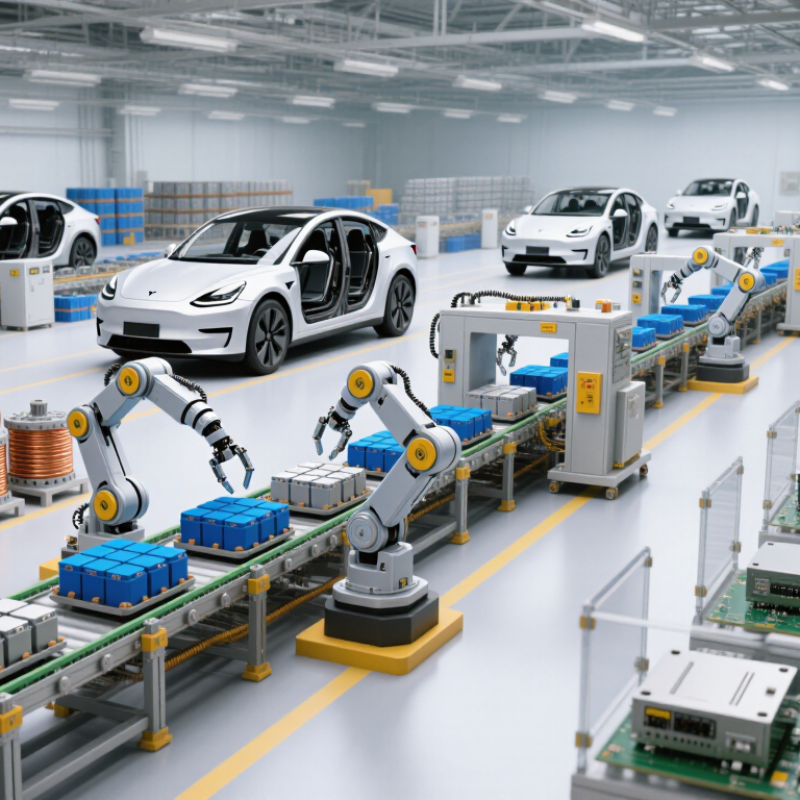
EV component manufacturing is the production of the systems that make electric vehicles move, charge, and operate safely. These components include battery cells, battery-management systems, electric motors, inverters, thermal-control units, sensors, wiring, and lightweight structural parts. Manufacturing covers material preparation, precision forming, automated assembly, software calibration, and quality testing. It is more than putting parts together.
The International Energy Agency reported nearly 14 million electric car sales in 2023, representing about 18% of global car sales. The same report estimated that electric-vehicle battery demand exceeded 750 gigawatt-hours, rising by roughly 40% that year. These figures are pushing suppliers to improve energy density, production speed, traceability, and recycling processes. A battery module may look compact, but hundreds of cells must manage heat, vibration, and uneven charging. Small errors can create expensive failures.
Component manufacturing remains imperfect. A part can pass laboratory tests and still perform poorly in winter traffic or heavy rain. Engineers therefore combine field data with controlled testing. The IEA’s Global EV Outlook 2024 also highlights continuing pressure on mineral supply chains and battery costs. This makes reliable process control essential. Digital inspection, statistical quality checks, and worker experience now matter as much as the machinery itself. Cost reduction alone is not enough. Reliability must be measurable.
EV component manufacturing is becoming increasingly important as global electric vehicle adoption drives strong demand for batteries, power electronics, electric motors, and charging systems.
The chart shows the estimated global demand for electric vehicle batteries from 2020 to 2023. Battery demand increased rapidly alongside EV sales, demonstrating why battery cells, materials, modules, and related components are strategically important for future manufacturing.
Source: International Energy Agency, Global EV Outlook 2024. Values are rounded estimates.
Why Is EV Component Manufacturing the Future?
Which Components Are Essential to Electric Vehicles?
The battery pack is the energy center of an electric vehicle. It contains cells, modules, cooling channels, sensors, and a battery management system. The management system monitors voltage and temperature in real time. Small errors matter. A damaged cell can reduce range, increase heat, or shorten service life. Manufacturers therefore use automated inspection, controlled assembly rooms, and repeated safety testing.
The electric motor converts stored energy into motion. Its rotor, stator, magnets, bearings, and housing must work with tight mechanical tolerances. The inverter controls power between the battery and motor. It changes direct current into the alternating current needed for efficient operation. Engineers also test vibration, moisture, and high-load conditions. A quiet motor may still hide efficiency problems.
Thermal management connects many components. Pumps, heat exchangers, coolant lines, and temperature sensors help control the battery, motor, and power electronics. Charging hardware is equally important because it must manage current safely during different charging speeds. Lightweight body structures, wiring systems, braking sensors, and vehicle software support performance and safety. Manufacturing remains imperfect, however. Material defects, software faults, and inconsistent tolerances can appear even after strict inspections. Better traceability and real-world testing help manufacturers discover these weaknesses before they become expensive field problems.
| Essential Component | Primary Function | Typical Technology or Characteristics | Why It Matters for EV Manufacturing |
|---|---|---|---|
| Traction battery pack | Stores electrical energy and supplies power to the drivetrain. | Usually built from lithium-ion cells; vehicle architectures commonly use nominal voltage classes around 400 V or 800 V. | Cell, module, and pack production requires precise assembly, electrical testing, safety controls, and thermal design. |
| Battery management system (BMS) | Monitors cell voltage and temperature, estimates battery state, and helps keep operation within safe limits. | Combines sensors, control electronics, and software; many designs balance cell voltages during operation or charging. | Reliable electronics and calibration help protect the battery and support consistent vehicle performance. |
| Traction motor | Converts electrical energy into rotational force to drive the wheels. | Common designs include permanent-magnet synchronous and induction motors; many traction motors can exceed 90% efficiency over suitable operating ranges. | Demand for efficient motors drives investment in precision winding, magnetic materials, and automated assembly. |
| Inverter | Converts battery DC power into controlled AC power for the traction motor and manages motor torque. | Uses power semiconductor switches, commonly silicon IGBTs or silicon-carbide MOSFETs, depending on the design. | Advanced power modules and thermal management can improve power density and reduce conversion losses. |
| On-board charger | Converts AC electricity from a compatible charging supply into DC power for the battery. | Passenger-vehicle AC charging capacity varies by vehicle and market; designs commonly range from a few kilowatts to roughly 11 kW, with some supporting higher power. | Compact, efficient charger production is important as charging capability becomes a key vehicle feature. |
| DC-DC converter | Steps high-voltage battery power down to lower-voltage levels for auxiliary electrical systems. | Typically supplies a low-voltage vehicle network, often 12 V; some vehicle designs also use 48 V systems. | Efficient conversion supports reliable operation of lighting, control units, and other auxiliary loads. |
| Thermal management system | Controls temperatures of the battery, motor, power electronics, and cabin. | May use liquid cooling, refrigerant circuits, heat pumps, or combinations of these technologies. | Integrated thermal components help maintain performance, support battery longevity, and improve energy use in different climates. |
| Reduction gear and differential | Transfers motor torque to the wheels and provides the required speed reduction. | Many EVs use a single-speed reduction gear; multi-speed designs are also used in some applications. | Precision gears, bearings, and housings are essential for durability, efficiency, and low noise. |
| Charging inlet and high-voltage wiring | Connects the vehicle to charging equipment and safely distributes high-voltage power within the vehicle. | Connector types vary by region and charging standard; cables and connectors are designed for specified current, voltage, and environmental conditions. | Robust connectors, insulation, shielding, and assembly checks are vital for safe charging and dependable operation. |
Note: Specifications vary by vehicle, market, and design; the characteristics above are general examples rather than universal requirements.
Electrification is changing what manufacturers make and how they make it. Demand is growing for battery enclosures, power electronics, electric motors, and thermal-management parts. Each component brings different material and process requirements. Aluminum housings, for example, need precise machining and careful checks for leaks. Demand is shifting.
A battery pack may contain hundreds of connected cells, so small inconsistencies can affect performance. Factories need repeatable assembly, traceable inspection, and reliable testing at several stages. Power electronics add another challenge: heat must move away from sensitive components. That can mean tighter tolerances for cooling plates and more attention to joining quality. These requirements are reshaping investment in production equipment and worker training, not just product design.
The transition is not perfectly tidy. Automakers and suppliers still face changing designs, uneven demand, and limits on available materials. A line built for one component may not adapt quickly to another. Flexible tooling can help, but it costs money and does not solve every bottleneck. I have seen manufacturing plans look clean on paper, then meet complications on the factory floor. Practical decisions depend on production volume, quality data, and the ability to maintain equipment over time. As electrification expands, manufacturers must balance speed with dependable processes and realistic capacity.
EV component production is moving toward connected, highly monitored factory lines. The International Energy Agency’s Global EV Outlook 2024 estimates that electric-vehicle battery demand reached about 750 gigawatt-hours in 2023. That was roughly 40% above 2022. This growth makes reliable production more important. Robotic systems can place battery cells and repeat welds, while machine vision checks seams, seals, and connector alignment. Small defects matter. The International Federation of Robotics reported 541,302 industrial robot installations worldwide in 2023 in World Robotics 2024. That figure covers all industries, not EV plants, but it shows the scale of automation available to manufacturers.
Digital twins can model a production line before engineers change equipment or process settings. Sensors can track temperature, vibration, and pressure, helping teams catch equipment drift before it causes batches of faulty parts. For motors and inverters, precise machining and automated inspection help control tight tolerances. Additive manufacturing can also produce prototypes and custom fixtures quickly, though it is not a universal substitute for high-volume production. Still, limits remain. A digital model may miss real factory conditions, and sensors need careful calibration. Skilled operators must question the data, not simply trust a dashboard.
Electric-vehicle component plants must make parts that are lighter, stronger, and consistently precise. Battery trays, motor laminations, and inverter housings each demand different tolerances. A poorly aligned cooling channel can cause rework or shorten a component’s service life. At scale, small defects become expensive. Automation helps, but sensors still need careful calibration and experienced operators.
Material supply is another pressure point. Manufacturers depend on metals, electronic parts, and specialized materials whose availability and prices can shift. Building closer supplier networks may reduce delays, but it does not remove every bottleneck. Traceability also takes effort: teams need reliable records of materials and production conditions. That is not simple. A rushed change in design can leave machines, workers, and inspection plans out of sync.
Factories will also need skilled workers who can maintain automated lines and interpret quality data. Energy use matters, especially where heating, machining, and climate control run throughout the day. Recycling scrap and designing components for easier disassembly can help, though both require investment and coordination. A plant may look efficient on paper yet waste time moving parts between workstations. That detail is easy to miss, and worth measuring.
It makes the systems that help electric vehicles move, charge, and operate safely. These include battery cells, motors, inverters, sensors, and wiring.
Production can include material preparation, precision forming, automated assembly, software calibration, and quality testing. It is more than joining parts.
A battery pack may contain hundreds of connected cells. Small differences can affect charging, heat, and performance. Small errors matter.
Manufacturers need more battery enclosures, electric motors, power electronics, and thermal-control parts. Each requires different materials and production checks.
Uneven cells can affect a pack’s performance. Factories use repeatable assembly, traceable inspections, and testing at several stages.
Heat must move away from sensitive parts. Cooling plates need careful checks, including attention to fit and joining quality.
Designs and demand can change, while materials may be limited. Flexible equipment helps, but it costs money and may not fix every bottleneck.
No. A component may pass controlled tests yet struggle in winter traffic or heavy rain. Field data matters, too.
Global electric-car sales reached nearly 14 million in 2023, about 18% of car sales. Battery demand also rose sharply. A neat plan can still meet factory-floor complications.
EV component manufacturing is the process of designing and producing the parts that enable electric vehicles to store, manage, and use energy. Essential components include battery packs, electric motors, power electronics, charging systems, thermal-management equipment, and control units. As transportation becomes more electrified, demand is shifting toward these specialized parts and the production capabilities needed to make them reliably, efficiently, and at scale. Manufacturers are responding with advanced automation, precision assembly, improved materials, digital monitoring, and testing methods that help enhance performance and consistency.
What is the future of electric vehicle component manufacturing? It will depend on how well the industry can expand production while managing costs, securing materials, reducing waste, and adapting to changing technical requirements. Companies will also need to build flexible supply chains and develop skilled workforces as designs and production methods evolve. Progress in these areas can help create more durable, efficient components and support the broader transition to electric mobility.
DCI Autos