Electric vehicles are transforming the automotive industry. With increasing adoption, the need for efficient charging systems grows. But how do electric vehicle charging systems work? Understanding this is crucial for potential EV owners.
Charging systems facilitate the delivery of electricity to the vehicle’s battery. They vary significantly in speed and technology. Some are simple Level 1 chargers, while others are advanced DC fast chargers. Each system has its own method of converting electricity for vehicle use.
While these technologies are impressive, they also have limitations. Not all locations may offer reliable charging options. Moreover, charging speeds can fluctuate based on various factors. Consumers must consider these aspects when choosing an electric vehicle. As the demand for EVs continues, understanding how charging systems function will become vital for a smooth transition to electric mobility.
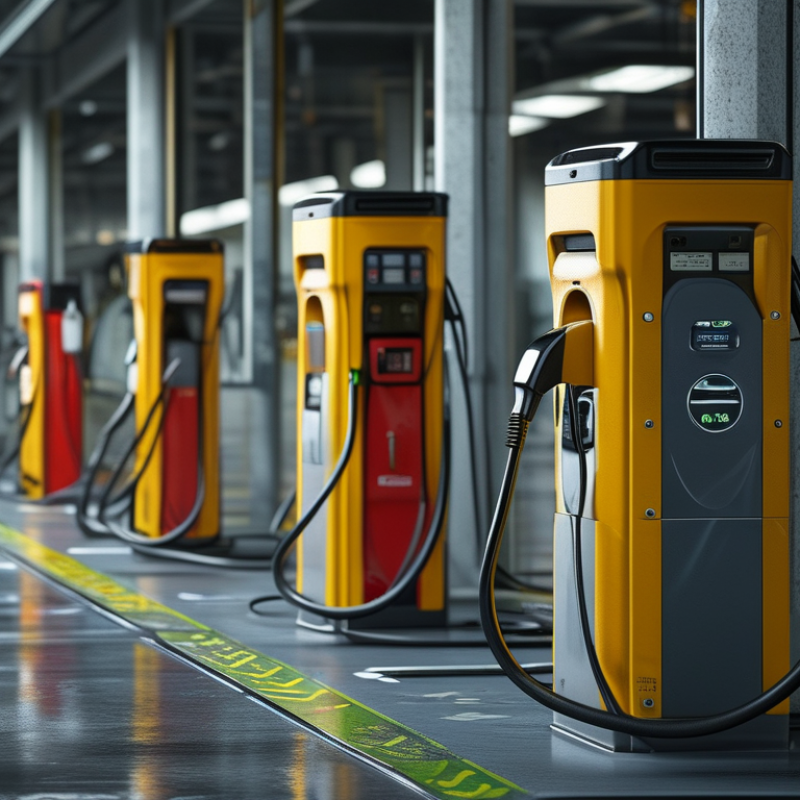
Electric vehicle (EV) charging systems are essential for sustainable transportation. Understanding how they work can enhance user experience and optimize energy use. These systems convert electricity from the grid into a form that vehicles can store and use. With various types available, each works slightly differently.
Level 1 chargers use standard household outlets. They are slow but convenient for overnight charging at home. Level 2 chargers, often found in public places, require special equipment. They provide quicker charging by delivering more power. Fast chargers can be installed along highways, promoting long-distance travel. Each charging method has its benefits and limitations. For instance, fast chargers can be pricey and may not be accessible everywhere.
Accessibility is another concern. Some areas lack adequate charging infrastructure, making long trips challenging. Additionally, the efficiency of different charging systems can vary based on electricity source and grid demand. Users may need to wait during peak hours, which can be inconvenient. Learning about these aspects ensures that EV owners make informed choices, maximizing their vehicle's potential.
Electric vehicle (EV) charging stations vary widely, catering to different needs and preferences. Level 1 chargers are the most basic. They use regular household outlets and charge slowly. Typically, they add about 4-5 miles of range per hour. This option is ideal for overnight charging at home, but it may not suffice for everyone.
Level 2 chargers are more efficient. They require a dedicated charging unit and can deliver 10-60 miles of range per hour. These stations are found in public places like shopping centers and workplaces. Users often appreciate the higher speed for quick stops.
DC fast chargers are the fastest option available. They can charge vehicles to 80% in approximately 30 minutes. These stations are crucial for long-distance travel. However, infrastructure varies by region. Access can be inconsistent, and not all EVs support fast charging. Understanding these different types ensures that drivers can choose the right system for their needs.
| Charging System | Charging Type | Charging Speed | Typical Use | Voltage Level |
|---|---|---|---|---|
| Level 1 Charging | AC Charging | Slow (3-5 miles/hour) | Home Charging | 120V |
| Level 2 Charging | AC Charging | Moderate (10-20 miles/hour) | Public Charging, Home | 240V |
| DC Fast Charging | DC Charging | Fast (60-80 miles/30 minutes) | Highway, Rapid Charging Stations | 400-800V |
| Tesla Supercharger | DC Charging | Very Fast (up to 175 miles/30 minutes) | Long-Distance Travel | 480V |
| CHAdeMO | DC Charging | Fast (up to 100 miles/30 minutes) | Public Charging Stations | 400V |
| GB/T Charging | DC Charging | Fast (up to 280 miles/30 minutes) | China Market | 400V |
| Wireless Charging | Inductive Charging | Variable | Convenience Charging | N/A |
| Portable EV Charger | AC Charging | Variable (depends on outlet) | Home, Emergency Use | 120V or 240V |
| Solar EV Charger | AC Charging | Variable | Eco-Friendly Charging | Varies |
| Fleet Charging Station | DC Charging | Fast | Commercial Use | 400-800V |
Electric vehicle (EV) charging systems are crucial for sustainable transportation. They primarily fall into three types: Level 1, Level 2, and DC Fast Charging. Each type serves different needs and operates on varying principles.
Level 1 charging uses a standard home outlet, delivering around 1.4 kW. While it's convenient, it’s also slow. Most EVs require about 12 to 20 hours for a full charge. This is practical for overnight charging but can be impractical for daily use. Industry reports suggest that Level 1 charging accounts for about 80% of home charging sessions, highlighting its dominance despite its limitations.
Level 2 charging is faster, supplying up to 7.2 kW. This system uses a specialized charger and can provide a full charge in 4 to 6 hours. It’s common in public charging stations and workplaces. However, access can be inconsistent, leading to frustrations among EV users. DC Fast Charging, on the other hand, operates at rates between 50 kW and 350 kW, reducing charge times to 30 minutes or less. Nonetheless, these stations are not as widespread, and sometimes they face reliability issues. Data shows that while the charging networks are expanding, users often report downtime or maintenance lags at these locations.
The charging infrastructure for electric vehicles (EVs) is crucial for widespread adoption. Key components include charging stations, connectors, and power supply systems. Over 600,000 public charging stations exist in the U.S., according to the U.S. Department of Energy. This growth reveals the increasing need for accessibility in urban and rural areas alike.
Each charging station consists of several parts. The charging hardware, which converts electricity, plays a central role. It is important to have compatible connectors for different vehicle models. Currently, the Type 1 and Type 2 connectors dominate the market. Yet, standardization remains an ongoing issue that could hinder user experience. Battery management systems also optimize energy flow during the charging process.
Energy supply is another critical aspect. The transition to renewable energy sources is gaining momentum. Reports suggest that 20% of EV charging will come from solar energy by 2030. This shift is promising, yet the grid's capacity must be addressed to prevent outages. The concept of smart charging, which adjusts power based on demand, merits further exploration. Upgrades to power infrastructure are necessary to support both current and future EV needs.
Electric vehicle (EV) charging technologies are evolving rapidly. More EV owners need efficient and convenient charging solutions. The future of charging systems aims to address these demands. For example, wireless charging is gaining traction. This technology allows drivers to park over charging pads for convenient power transfer. However, it raises concerns about efficiency and power loss.
Another trend is ultra-fast charging. These systems can charge an EV in as little as 15 minutes. This capability could shorten long trips significantly. Yet, there are challenges. The infrastructure needed for ultra-fast charging is not widely available. Many drivers still have limited access to fast chargers.
Battery technology is also advancing. Solid-state batteries promise higher energy density and quicker charging times. While these could revolutionize EVs, production and cost remain issues. Integration of renewable energy sources with charging stations is crucial to reduce the carbon footprint. This approach is not yet mainstream. As technology progresses, both users and manufacturers must adapt to new practices. Continuous improvement and reflection on these technologies will shape the EV landscape in the coming years.
: Key components include charging stations, connectors, and power supply systems. Each part plays a vital role in the process.
There are over 600,000 public charging stations, showing a growing need for access in all areas.
Standardization helps improve the user experience. Currently, different connectors can cause compatibility issues.
Reports suggest that by 2030, 20% of EV charging may come from solar energy. It’s a promising shift.
Smart charging adjusts power based on demand. It can optimize energy usage but needs further exploration.
Ultra-fast charging can charge an EV in as little as 15 minutes. However, this infrastructure is limited.
Wireless charging allows convenient power transfer, but it raises concerns about efficiency and potential power loss.
Solid-state batteries offer benefits, but production and cost issues need to be resolved before widespread use.
Integrating renewables could help reduce the carbon footprint. This approach is not yet common in practice.
Continuous improvement in charging technology will shape the EV landscape. Reflection on changes will be crucial for success.
Electric vehicle charging systems are essential for the widespread adoption of electric vehicles (EVs). They come in various types, including Level 1, Level 2, and DC fast charging stations, each designed to meet different charging needs. Understanding how do electric vehicle charging systems work involves examining their structural components and the technology behind them. Level 1 chargers use standard household outlets, while Level 2 chargers offer faster charging through specialized equipment. DC fast charging stations significantly reduce charging time, making them ideal for long-distance travel.
The key components of electric vehicle charging infrastructure include connectors, power management systems, and communication protocols that ensure safe and efficient charging. As the demand for EVs grows, the industry is witnessing future trends such as wireless charging and enhanced grid integration, which promise to streamline charging processes and improve user experience. Overall, a comprehensive understanding of electric vehicle charging systems and their functionalities is crucial for consumers and industry stakeholders alike.

DCI Autos