Top 10 Tips for Choosing Reliable Electric Vehicle Components

Time:2026-10-29 Author:Ethan
0%

Choosing reliable electric vehicle components is a practical safety and performance decision, not just a purchasing task. The International Energy Agency’s Global EV Outlook 2024 reported nearly 14 million electric car sales in 2023. That represented about 18% of new car sales worldwide. The report also found that battery demand for electric vehicles grew by around 40% that year. These figures point to a fast-growing supply chain, where component quality and consistency matter.

But market growth does not prove that every part is dependable. This guide explores how to choose reliable electric vehicle components by checking specifications, supplier records, testing evidence, warranty terms, and long-term parts support. It also highlights details that can be easy to miss: a connector’s fit, a battery management system’s operating limits, or a component’s performance under heat and vibration. Ask for traceable documentation, and compare ratings against the vehicle’s actual requirements. A polished product page is not enough. Even a well-known supplier may not suit every design, and data sheets can leave gaps. That uncertainty deserves a second look. The tips ahead offer a structured way to assess components without treating a single certificate or sales claim as a guarantee.
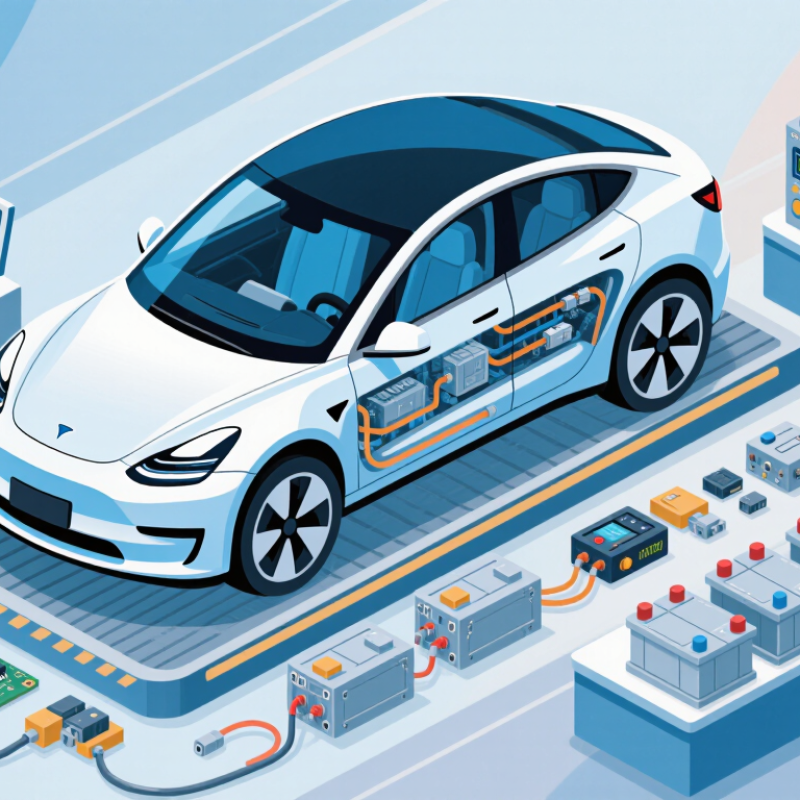
Top 10 Tips for Choosing Reliable Electric Vehicle Components

Map Vehicle Voltage, Current, and Thermal Needs Before Selecting Components

Before comparing components, map the vehicle’s electrical and thermal demands. Record the battery’s nominal voltage and highest expected voltage, including charging conditions. Note both continuous current and brief peak current for each circuit. A pump, inverter, and cabin heater rarely share the same load profile. Write down how long peak loads last and how often they occur. Small details matter.

Then estimate temperatures around each component, not just the cabin temperature. A controller near a warm motor may face very different conditions from one mounted in open airflow. Check datasheet limits for voltage, current, and operating temperature, and leave margin for real-world variation. Cooling paths, enclosure space, vibration, and connector ratings can change what looks suitable on paper. A spreadsheet can make assumptions seem precise; sometimes they are not. Revisit them when measurements or packaging details change. For uncertain loads, use logged test data and have a qualified engineer review the selection before installation. A little extra checking now can prevent nuisance shutdowns or premature wear later.

Match Functional-Safety Evidence to ISO 26262’s Four ASIL Levels, A–D

Top 10 Tips for Choosing Reliable Electric Vehicle Components

ASIL is not a simple quality grade attached to every component. Under ISO 26262, a vehicle-level hazard analysis determines the required Automotive Safety Integrity Level: A, B, C, or D. A represents the lowest level of automotive safety integrity; D represents the highest. Context matters. The same sensor may support different ASIL requirements in different systems, depending on hazards, exposure, and driver control.

Ask suppliers for evidence that matches your system’s assigned ASIL and intended use. Useful artifacts may include safety requirements, verification results, failure analysis, diagnostic coverage data, and a safety manual describing integration assumptions. Check that the evidence traces requirements to tests. Ask how faults such as a stuck signal or interrupted power are detected. Look beyond certificates. A certificate alone cannot show whether a component’s assumptions fit your design.

Review interfaces, operating conditions, and safety mechanisms with your engineering team. Confirm that evidence covers the component’s temperature range, electrical behavior, and failure responses in the vehicle. For higher ASIL targets, expect more rigorous development and verification evidence, not just stronger marketing language. Ask which assumptions your team must preserve during integration. Documentation can be tidy while gaps remain. A practical review of test records and change-control history can reveal whether safety claims stay valid as the component evolves.

Check High-Voltage Battery Safety Against UN GTR No. 20 and UN R100

For high-voltage components, ask suppliers for test evidence against UN GTR No. 20 and UN Regulation No. 100 (UN R100). They address electric-vehicle safety, including electrical hazards and rechargeable energy storage systems. They are related, but not interchangeable; requirements and approval pathways can vary by market and vehicle category. Check the exact regulation series and amendments cited in the approval documents. Then match the tested component and configuration to the part being offered. Small changes matter.

Look for clear reports covering the battery pack’s protection, insulation, and response to relevant safety tests. Confirm the document identifies the tested design, test conditions, and issuing laboratory. A tidy certificate is not the whole story. Traceability matters. The IEA’s Global EV Outlook 2024 reported nearly 14 million electric cars sold worldwide in 2023, about 18% of new car sales. That growth makes careful component checks practical, not ceremonial. Ask how design changes are controlled and whether test evidence still applies after them. Paperwork can look complete while leaving a gap. I would verify the details, not just the stamp.

Verify Charging Hardware Against IEC 61851 and Regional Connector Standards

The International Energy Agency’s Global EV Outlook 2024 reports that electric car sales exceeded 14 million in 2023, reaching about 18% of global car sales. That growth makes careful component checks more important. A familiar plug shape is not enough.

Verify that charging equipment is tested against the applicable IEC 61851 requirements for conductive charging systems, including safety and control functions. Check connector compatibility separately against IEC 62196 and the standards used in the markets where the vehicle will operate. Regional connector types differ. Confirm the exact inlet, cable, and charging-station configuration, then request current test reports and conformity documents. A label alone is not proof.

Tip: Ask suppliers for the standard edition, test scope, and evidence for the exact model—not just a general certificate. Check that protective functions, rated current, and temperature limits match the intended installation. Inspect connector pins and cable strain relief; these small details matter. It is easy to focus on the headline rating and miss a regional mismatch. That deserves a second look.

EV Charging Hardware: Check Voltage Compatibility

Representative nominal AC supply voltages vary by region and installation: North American supplies commonly include 120 V, 208 V, and 240 V; European supplies commonly include 230 V single-phase and 400 V three-phase. Confirm the site supply and equipment ratings, and verify the charging mode under IEC 61851 and connector compatibility against the applicable regional standard. These values describe typical supplies, not guaranteed charger ratings.

Compare Supplier Quality Records, Including IATF 16949 and Field-Failure Data

IATF 16949 certification is a useful starting point, not proof that every component will perform reliably. Ask suppliers for current certificates and confirm that the certified site actually makes the parts you are evaluating. Then review audit findings, corrective-action records, and evidence that recurring defects were addressed—not merely closed on paper.

Field-failure data adds the real-world view. Request failure rates by part number, production period, and operating conditions, along with warranty returns and investigation results. For an inverter connector, for example, look for issues linked to heat, vibration, or moisture exposure. Compare these records with laboratory test results; the two sources should tell a consistent story. The pattern matters.

Check how the supplier defines a failure and whether reported rates include all shipped units. A low rate from a tiny sample can be misleading. Ask for sample sizes, reporting periods, and any changes made after a failure. Records may still have gaps, especially for new components with limited field history. That uncertainty deserves a clear note, not a reassuring guess. Small details count. A supplier’s willingness to share limitations can be as informative as a polished quality dashboard.

Top 10 Tips for Choosing Reliable Electric Vehicle Components — Compare Supplier Quality Records, Including IATF 16949 and Field-Failure Data

Tip What to Evaluate Evidence to Request or Check How to Compare Suppliers
01 Confirm automotive quality-system certification. Current IATF 16949 certificate, certified manufacturing-site address, certificate scope, validity dates, and certification body details. Match the certificate to the actual site and component-production scope. Treat certification as evidence of a quality-management system, not as proof that a specific component is failure-free.
02 Review field-failure data with consistent definitions. Failure counts, shipped or installed population, time in service, operating conditions, failure-mode classification, and data cut-off date. Compare rates only when numerator and exposure denominator use the same definitions and product scope. Ask for results by component revision and application where available.
03 Check how failures are investigated and corrected. Redacted corrective-action examples, containment records, root-cause evidence, effectiveness checks, and customer-notification process. Look for a documented problem-solving process and evidence that corrective actions were verified over time, rather than relying only on a stated response-time target.
04 Verify traceability and change control. Lot or serial traceability, date-code records, material and process-change approvals, and change-notification procedures. Confirm that a suspect production lot can be identified and that changes to design, materials, tooling, process, or manufacturing location are controlled and communicated.
05 Assess component qualification against its intended use. Applicable qualification reports and the exact part number, construction, revision, and test conditions covered by each report. Check that the qualification matches the component type and intended environment. For example, AEC-Q100 applies to integrated circuits and AEC-Q200 to passive components; neither alone guarantees suitability for every vehicle application.
06 Evaluate environmental and electrical test coverage. Test plans and reports covering relevant temperature, vibration, humidity, electrical stress, insulation, or thermal-cycling requirements. Compare test conditions with the vehicle program’s actual requirements. Distinguish tests performed on the offered part and revision from tests performed on similar products.
07 Review production-process controls. Process flow, control plan, inspection records, equipment-maintenance approach, measurement-system studies, and process-capability evidence where applicable. Check that critical characteristics have defined controls, suitable measurement methods, and documented responses to out-of-control conditions.
08 Check supply-chain and material-risk management. Sub-tier supplier oversight, material specifications, incoming-inspection approach, counterfeit-part prevention, and continuity or contingency plans. Assess whether risks are identified for critical materials and sub-tier processes, and whether changes or disruptions can be detected and communicated promptly.
09 Verify safety and regulatory documentation where relevant. Applicable safety analyses, compliance declarations, test reports, and transport documentation for regulated goods. For safety-related functions, assess whether the evidence matches the system’s safety requirements; ISO 26262 is a functional-safety standard for road vehicles. For lithium batteries transported by air, verify applicable UN 38.3 test-summary documentation.
10 Compare delivery quality and capacity evidence. On-time delivery records, incoming-rejection trends, backlog information, production-capacity evidence, and recovery plans for disruptions. Use records for the relevant site, product family, and comparable time period. Review trends and documented corrective actions rather than relying on a single performance snapshot.

Comparison note: Request dated, part-specific, and site-specific evidence where possible. Field-failure rates depend on exposure, operating conditions, and reporting practices, so figures from different suppliers should not be compared without aligned definitions and denominators.

FAQS

What does an ASIL level tell you about a vehicle component?

ASIL A is the lowest level, and ASIL D is the highest. Vehicle-level hazard analysis sets the need. The same sensor may support different levels depending on hazards, exposure, and driver control.

What safety evidence should you request from a supplier?

Ask for safety requirements, verification results, failure analysis, diagnostic coverage data, and a safety manual. Check that requirements trace to tests. Ask how the system detects a stuck signal or interrupted power.

Why isn’t a certificate enough?

A certificate cannot confirm that a component’s assumptions fit your design. Review interfaces, temperature limits, electrical behavior, and failure responses. Gaps can remain.

How should you review battery safety documents?

Check reports for battery protection, insulation, test conditions, and the tested configuration. Confirm the issuing laboratory and cited regulation series. The details matter.

Are UN GTR No. 20 and UN R100 interchangeable?

No. They address related electric-vehicle safety topics, but requirements and approval pathways can differ by market and vehicle category. Match each document to the relevant part and vehicle.

How can you tell whether test evidence still applies after a design change?

Ask how changes are controlled and whether the tested configuration matches the offered component. Even a small change can matter. I would double-check.

What does IATF 16949 certification tell you about a supplier?

It is a useful starting point, not proof that every part is reliable. Check that the certificate is current and covers the site making the component. Review audit findings and corrective actions.

Which field-failure details should you request?

Ask for failure rates by part number, production period, and operating conditions. Request sample sizes, reporting periods, warranty returns, and investigation results. A low rate from a tiny sample can mislead.

How should field data compare with laboratory results?

The two sources should tell a consistent story. For an inverter connector, compare lab findings with reported heat, vibration, or moisture issues. New parts may have limited history; note that uncertainty clearly.

Conclusion

Choosing dependable electric vehicle components begins with understanding the vehicle’s operating conditions. Define voltage, current, and thermal requirements before comparing parts, so each component can function safely and consistently under expected loads. Review functional-safety evidence in relation to the applicable ASIL level, from A through D, and assess high-voltage battery protections against relevant UN GTR No. 20 and UN R100 requirements. For charging equipment, confirm compatibility with IEC 61851 and the connector standards used in the vehicle’s intended markets.

A careful supplier review is equally important. Compare quality-management records, including IATF 16949 certification where applicable, and examine field-failure information for signs of reliability issues. Consider how components perform as part of the complete vehicle system, not just their individual specifications. Together, these steps offer a practical approach to how to choose reliable electric vehicle components, helping buyers make informed selections based on engineering needs, safety evidence, charging compatibility, and demonstrated quality.

Ethan

Ethan

Ethan is a seasoned marketing professional with a deep expertise in our company's innovative product line. With a passion for sharing knowledge and insights, he takes the lead in regularly updating our corporate blog, where he explores industry trends, product features, and effective marketing......