Electrification is rewriting automotive supply chains from the factory floor to the mining region. The key question is: how does electrification change automotive supply chains? It shifts value toward batteries, software, power electronics, and critical minerals. A vehicle may contain fewer mechanical parts, yet its supply network becomes more technologically demanding. Battery cells require lithium, nickel, graphite, and advanced manufacturing equipment. These materials often travel across several borders before reaching an assembly plant.
Andy Palmer, former Nissan chief operating officer and a respected automotive strategist, captured this shift clearly: “The battery is the new engine.” His statement explains why automakers are building direct relationships with mining companies, cell producers, and recycling specialists. Supplier contracts now cover chemistry, energy use, traceability, and future recovery. A delayed shipment of battery separators can stop production just as quickly as a missing transmission component.
The change is visible in practical details. Plants need high-voltage safety systems, dry rooms, battery testing stations, and skilled software engineers. Logistics teams must also manage heavier battery packs and stricter transport controls. Regional production is becoming more attractive, especially where incentives and local-content rules support investment. Still, electrification does not automatically create a cleaner or safer chain. Mining impacts, electricity sources, labor conditions, and recycling capacity require honest scrutiny. Some forecasts may prove too optimistic. Battery chemistry could also change faster than supplier contracts.
Strong companies will map risks beyond tier-one suppliers. They will measure carbon, verify origins, and design flexible sourcing plans. The transition is complicated. It is also already underway.
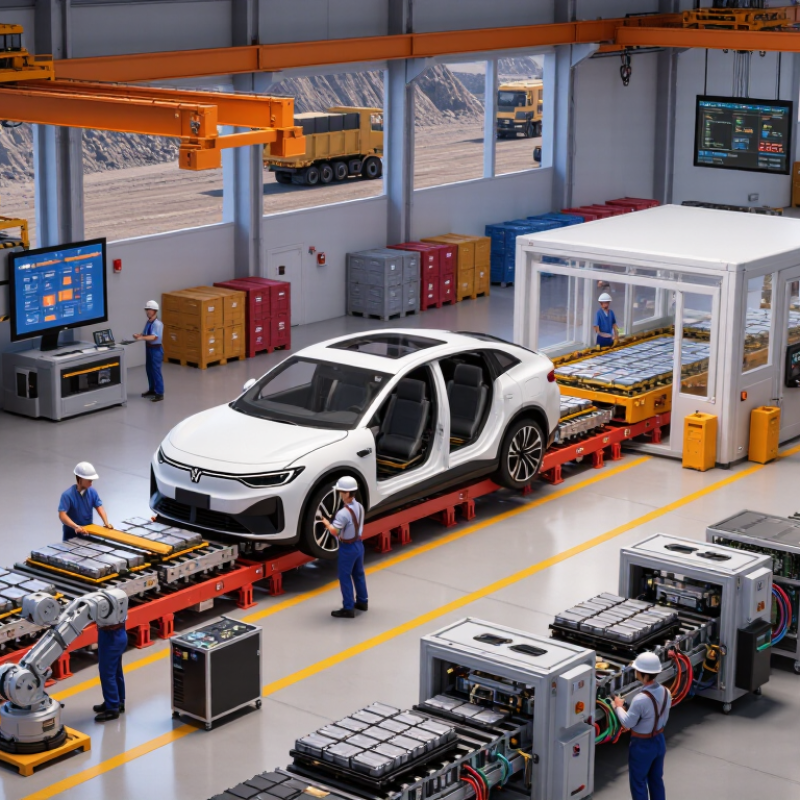
Electrification is reshaping automotive supply chains from mining sites to repair workshops. The International Energy Agency’s Global EV Outlook 2024 reports nearly 14 million electric car sales in 2023. That volume changes purchasing, logistics, and production planning.
Battery materials now influence sourcing decisions more than traditional engine components. IEA data shows electric vehicle battery demand grew about 40% in 2023. Meanwhile, its Global Critical Minerals Outlook 2024 identifies strong concentration in mineral refining. A disruption at one processing region can affect cells worldwide. Supply teams therefore need dual sourcing, regional inventories, and clearer material traceability. These measures cost more. They also reduce exposure to sudden shortages.
Factories must learn different rhythms. Battery plants require controlled humidity, specialized safety systems, and strict quality testing. Electric drivetrains use fewer moving parts, but software and power electronics become more important. The U.S. Department of Energy reported a significant decline in battery pack costs between 2008 and 2023, yet cost reductions are not guaranteed. Mining constraints, energy prices, and recycling capacity remain uncertain. The transition is not perfectly linear. Some forecasts may be too optimistic. In practice, suppliers still face outdated systems, uneven technical skills, and difficult data sharing. A resilient chain will need regional flexibility, verified supplier data, and workers trained for both mechanical and electrical production.
Electrification changes the vehicle at its core. Engines give way to battery packs, electric motors, inverters, and complex thermal systems. Battery modules require precise cells, busbars, sensors, cooling plates, and high-voltage insulation. Copper demand rises because motors and cables need efficient current flow. Aluminum also becomes important because lightweight structures can extend driving range.
Materials now face stricter performance demands. Adhesives must withstand heat, vibration, and moisture without weakening. Battery enclosures need strong crash protection and controlled venting. Some motors use magnetic materials with difficult supply risks. Recycled metals can reduce pressure on raw materials, but quality may vary between suppliers. That assumption can fail.
Manufacturing processes are changing too. Assembly lines need insulated tools, electrical testing, and safer energy-control procedures. Workers must verify torque, connector position, and insulation resistance at several stages. Automated vision systems can detect small defects in cells or welds. Traceability becomes essential, especially when one faulty batch affects thousands of components. In factory audits, paperwork often looks complete while process discipline remains uneven. This is a serious weakness. Suppliers also need new testing equipment, trained technicians, and flexible production layouts. Some facilities are designed around combustion components and cannot adapt quickly. Rebuilding them takes capital, time, and careful planning.
Electrification is moving automotive supply chains closer to mines, refineries, and chemical processors. The International Energy Agency’s Global EV Outlook 2024 reported that electric vehicle battery demand reached about 750 GWh in 2023, rising nearly 40% in one year. This growth changes purchasing decisions. Automakers now need long-term mineral contracts, regional refining capacity, and tighter supplier audits. A battery plant cannot operate reliably when lithium chemicals arrive late or graphite quality varies between shipments.
The mineral challenge is larger than battery assembly. The IEA’s Global Critical Minerals Outlook 2024 found that lithium demand grew by roughly 30% in 2023, while demand for nickel, cobalt, graphite, and rare earth elements also increased. The U.S. Geological Survey reported that global lithium mine production reached approximately 180,000 metric tons in 2023, excluding recycled material. Those figures expose a weakness: mining expansion often takes longer than factory construction. Very long. Supply chains also need traceability, lower water impacts, and practical recycling systems. The International Energy Agency estimates that recycled battery materials could reduce new mining needs substantially by 2040, but collection networks remain uneven. This is where planning can become overly optimistic. A regional battery chain may still depend on distant chemical processing, specialized equipment, or imported materials. Engineers should test alternate chemistries, maintain qualified backup suppliers, and measure carbon intensity at each stage. The spreadsheets are improving, but the physical risks remain.
Electrification is reshaping automotive supply chains from the battery cell outward. Suppliers now manage more exposure to minerals, software, thermal systems, and power electronics. A gearbox specialist may need new machining skills or face declining demand. In supplier audits, traceability matters as much as unit price. One missing material record can delay production for days.
Logistics is changing too. Batteries require careful packaging, temperature controls, and stricter handling procedures. Their weight can increase freight costs and reduce truck capacity. Warehouses need fire prevention systems, trained operators, and separate storage zones. The pattern is uneven. Regional infrastructure still determines whether electric components move smoothly or wait at a terminal.
Workforce planning has become less predictable. Assembly teams need high-voltage safety training, diagnostic skills, and stronger digital literacy. Production networks are also being redesigned, with battery plants moving closer to vehicle factories. This can shorten transport routes, but it may concentrate risk in one area. A power outage or supplier failure can affect several facilities at once. Managers often assume new equipment will solve labor gaps. It rarely does. Human oversight remains essential, especially during pilot production, where small process errors can damage expensive cells. The transition is measurable, but not perfectly controlled.
| Supply-Chain Area | Measured Dimension | Internal-Combustion Vehicle Pattern | Electrified Vehicle Pattern | Primary Supply-Chain Effect | Planning Response |
|---|---|---|---|---|---|
| Suppliers | Powertrain component complexity | Multi-speed transmission, fuel system, exhaust treatment, engine and lubrication systems. | Battery pack, electric motor, inverter, charging hardware and high-voltage control systems. | Demand shifts away from several mechanical components and toward batteries, power electronics, software and thermal management. | Reallocate engineering and capital spending toward high-voltage, electronics and battery-related capabilities. |
| Suppliers | Material intensity | Higher dependence on iron, steel, aluminum and petroleum-derived operating fluids. | Greater demand for battery minerals and electrically conductive materials. An electric vehicle typically uses about 2.5 times more copper than a conventional vehicle. | Exposure increases to mineral extraction, refining capacity, commodity prices and responsible-sourcing requirements. | Use multi-region sourcing, recycled content and traceability for critical minerals. |
| Logistics | Inbound freight risk | Large number of mature, distributed mechanical-component supply streams. | Concentrated flows of battery cells, modules, packs, cathode materials and electronic components. | A disruption at a battery-material or cell-production node can interrupt vehicle output more quickly than a disruption involving a low-value standard part. | Increase buffer-stock analysis, supplier qualification and visibility beyond tier-one suppliers. |
| Logistics | Transport and handling requirements | Established rules for transporting engines, fuel-system parts and lubricants. | High-voltage batteries require controlled handling, state-of-charge management, protective packaging and specialized fire-risk procedures. | Packaging, warehousing, insurance and emergency-response requirements become more complex for damaged or end-of-life batteries. | Train logistics teams, certify handling processes and define clear quarantine procedures for damaged packs. |
| Workforce | Skill requirements | Strong concentration of mechanical assembly, machining, engine calibration and maintenance skills. | Greater need for electrical engineering, battery chemistry, embedded software, power electronics, data analysis and high-voltage safety. | Existing workers require reskilling, while competition increases for specialized technical talent. | Create certification pathways covering electrical isolation, battery diagnostics, software and digital manufacturing. |
| Workforce | Production-labor mix | More labor and equipment are dedicated to engine, transmission and exhaust-system assembly. | Fewer engine-related assembly steps, but more automation, testing, electronics integration and battery-quality inspection. | Employment demand is redistributed across occupations and locations rather than simply eliminated. | Link workforce planning to product mix, automation levels and regional training capacity. |
| Production Networks | Plant configuration | Plants are commonly organized around engine, transmission, stamping, body and final-assembly operations. | Production requires battery-module or pack assembly, high-voltage testing, thermal-management integration and software validation. | New facilities or major retrofits may be needed, especially where battery production must be located near vehicle assembly. | Design flexible plants that can support multiple powertrain types during the transition period. |
| Production Networks | Geographic concentration | Mature regional clusters support conventional powertrain suppliers and established cross-border flows. | Battery-material processing and cell manufacturing are more geographically concentrated than many traditional vehicle components. | Regional policy, energy prices, grid capacity and access to minerals increasingly influence plant location. | Evaluate total landed cost together with energy availability, incentives, recycling capacity and geopolitical exposure. |
| Circular Supply Chain | End-of-life recovery | Established recovery routes for steel, aluminum, lead-acid batteries and catalytic-converter materials. | Growing need for battery collection, state-of-health testing, second-life assessment and mineral recovery. | Reverse logistics becomes a strategic source of materials and a compliance requirement in several markets. | Build battery traceability, recycling partnerships and standardized pack-disassembly processes. |
Electrification is reshaping automotive supply chains through new materials, suppliers, and production risks. Battery minerals often come from concentrated regions, creating exposure to transport delays, price shocks, and geopolitical disruption. In supplier assessments, planners should examine mine locations, processing capacity, shipping routes, and backup contracts. A delayed shipment can stop an entire assembly line. The risk is physical.
Sustainability also requires more than measuring factory emissions. Carbon accounting should include mineral extraction, refining, transport, battery production, and end-of-life treatment. Electricity sources matter. A battery made with coal-heavy power may carry a larger footprint than expected. Recycling capacity remains uneven across markets, so recovery plans need verified partners, safe collection systems, and clear material records. That gap matters.
Future adaptation will depend on flexible design and better operational evidence. Manufacturers can use modular battery architectures, regional suppliers, and scenario testing for critical components. They also need technicians trained in high-voltage systems and maintenance procedures. Digital traceability can connect shipment data with environmental and quality checks. Yet this approach is not flawless. We still overestimate what software can solve. Data may be incomplete, delayed, or supplied without independent verification. A resilient chain therefore needs physical stock, skilled people, and regular supplier audits, not dashboards alone. Even careful plans can fail when demand changes faster than infrastructure investment.
Battery demand reached about 750 GWh in 2023. Automakers now need reliable mineral contracts, refining capacity, and supplier records. A late lithium shipment can stop production.
Lithium, nickel, cobalt, graphite, and rare earth elements are increasingly important. Mining expansion often takes longer than factory construction. Very long.
They can test alternative battery chemistries and qualify backup suppliers. Regional processing can shorten some routes. It cannot remove every dependency.
Traceability links materials to their origin, processing, quality, and environmental data. One missing record may delay production for several days. The paperwork still needs checking.
Batteries require careful packaging, temperature controls, and trained handling. Their weight can raise freight costs and reduce truck capacity. Warehouses may need fire prevention systems and separate storage zones.
Workers need high-voltage safety training, diagnostic abilities, and stronger digital skills. Technicians must understand battery systems and maintenance procedures. Equipment alone rarely solves labor shortages.
It can shorten transport routes and improve coordination with vehicle factories. However, regional plants may still depend on distant chemical processing or imported equipment. This assumption deserves more testing.
Carbon accounting should cover mining, refining, transport, production, and end-of-life treatment. Electricity sources also matter. Coal-heavy power can increase the battery’s footprint.
Recycled materials could reduce the need for new mining substantially by 2040. Collection networks remain uneven, however. Recovery plans need safe systems and verified material records.
Data may arrive late, remain incomplete, or lack independent verification. Resilience also requires physical stock, skilled people, and regular audits. Software helps, but it is not magic.
Electrification is reshaping automotive supply chains by replacing many traditional engine, transmission, and exhaust components with electric motors, power electronics, battery systems, and advanced software. This shift changes material demand, manufacturing processes, factory layouts, and supplier capabilities. Understanding how does electrification change automotive supply chains requires examining the growing importance of battery cells, specialized electronics, and critical minerals such as lithium, nickel, cobalt, graphite, and copper. These materials require more careful sourcing, processing, recycling, and risk management.
The transition also affects logistics, workforce skills, production locations, and relationships between vehicle manufacturers and suppliers. Battery production may encourage regional supply networks, while mineral supply constraints and changing regulations can create cost, delivery, and sustainability challenges. Companies must improve traceability, diversify suppliers, develop recycling systems, and invest in cleaner production methods. In the future, flexible manufacturing, responsible material management, digital supply-chain monitoring, and workforce training will be essential for building resilient and environmentally sustainable automotive production networks.

DCI Autos