How China Best EV Components Support Sustainable Transport?

Time:2026-10-10 Author:Oliver
0%

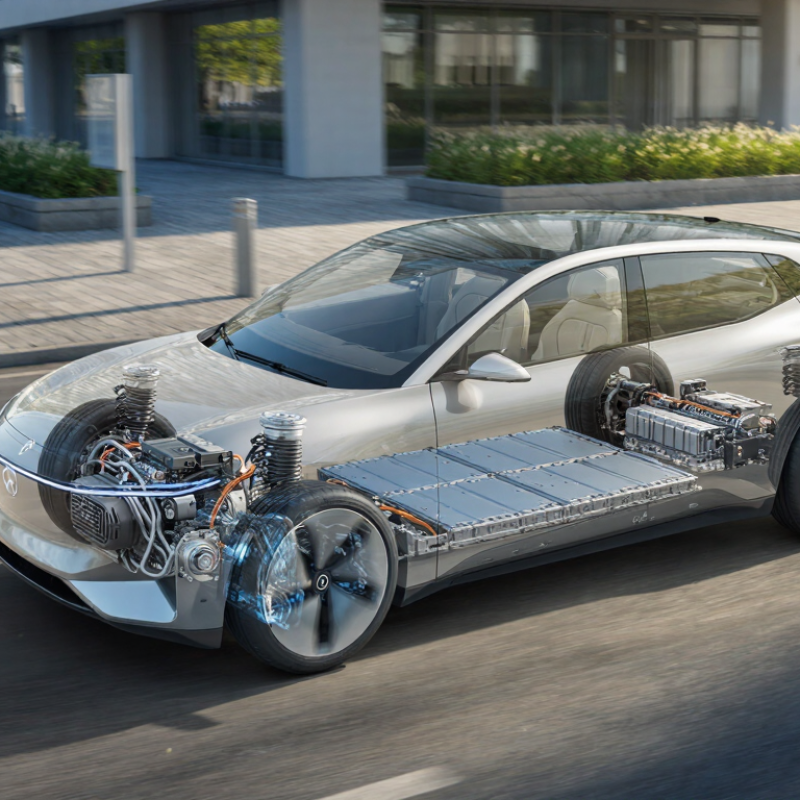
Electric vehicles are often presented as clean by default, but their environmental value depends on component quality, manufacturing, and long-term use. The better question is, “how do electric vehicle components support sustainable transportation?” Battery cells store energy efficiently, while battery management systems monitor temperature, voltage, and charging conditions. These controls can improve safety and extend battery life.

Electric motors convert electrical energy into motion with fewer moving parts than conventional engines. Inverters regulate power delivery, helping vehicles use energy more precisely during acceleration. Regenerative braking captures some kinetic energy during deceleration. On a city street, this can recover energy each time a driver approaches a traffic light. Small gains become meaningful across thousands of daily journeys.

Thermal management also matters. Coolant channels, heat pumps, and reliable sensors can maintain battery performance in hot summers and cold mornings. Lightweight aluminium structures may reduce energy demand, although mining and processing create environmental costs. That trade-off deserves more attention. Sustainable transport is not achieved by one component alone. It requires responsible material sourcing, durable design, repairable systems, and cleaner electricity.

Industry engineers increasingly evaluate components through lifecycle assessments, warranty data, and real-world fleet testing. These methods provide stronger evidence than marketing claims. However, battery recycling infrastructure remains uneven, and supply-chain transparency can still improve. Manufacturers should publish clearer data about emissions, material origins, failure rates, and recovery practices. Buyers also need practical information, such as expected battery degradation after years of charging. The technology is promising, but it is not flawless. Honest evaluation makes progress more credible.
How China Best EV Components Support Sustainable Transport?

Global EV Demand: Over 14 Million Sales in 2023 (IEA)

Global electric vehicle demand passed 14 million sales in 2023, according to the International Energy Agency. This figure shows how quickly electric mobility is entering everyday transport. It also exposes a difficult question: can supply chains grow without creating new environmental pressure? China’s EV component industry has become an important part of this transition. Battery cells, electric motors, inverters, charging modules, and thermal systems are produced at significant scale. These parts help vehicles use energy more efficiently and reduce dependence on fossil fuels during operation.

In practical engineering work, component quality affects sustainability directly. A reliable battery may retain useful capacity for many years. Efficient power electronics can reduce energy losses between the battery and motor. Lightweight materials may lower electricity use on every journey. Manufacturing details matter too. Renewable electricity, safer chemical handling, water reuse, and factory-level emissions monitoring can improve the environmental profile of each component. Long-distance shipping remains a concern, however. Lower production costs do not automatically mean lower total emissions.

The industry still has blind spots. Battery recycling capacity is developing, but it is not equally available everywhere. Supply data can also be incomplete, making comparisons difficult. Overstating progress would weaken public trust. A more credible approach combines independent testing, traceable materials, transparent carbon reporting, and repair-friendly design. Global sales above 14 million create strong momentum, yet sustainable transport requires more than selling vehicles. It requires components that remain efficient, safe, durable, and recoverable throughout their working lives.

How China’s EV Components Support Sustainable Transport

Global electric car sales exceeded 14 million in 2023, according to the International Energy Agency. China accounted for approximately 7.9 million sales, making it the largest market and a major production base for batteries, electric motors, power electronics and charging equipment. These components help improve vehicle efficiency, reduce operating emissions and accelerate the transition to sustainable transport.

China’s Cell Capacity: More Than 75% of Global Capacity (IEA, 2023)

How China’s EV Components Support Sustainable Transport

China’s battery cell capacity exceeded 75% of global capacity in 2022, according to the International Energy Agency’s Global EV Outlook 2023. This concentration shapes electric transport worldwide. Cells are the quiet core of buses, delivery vans, passenger cars, and energy storage systems.

Large-scale production can reduce costs through automation, shared suppliers, and higher equipment utilization. The IEA reported that battery pack prices fell sharply in 2023, reaching about 139 US dollars per kilowatt-hour globally. Lower prices can make electric fleets easier to finance. They also support longer service planning, especially for vehicles operating through crowded city streets and frequent charging cycles.

The details matter.

Sustainable transport needs more than cell volume.

It requires safer thermal management, traceable minerals, durable electrodes, and efficient recycling. The IEA’s Global Critical Minerals Outlook 2024 noted that China remains central to refining several battery materials, including graphite and lithium-related products. This creates technical strength, but also supply-chain dependence. A factory may have impressive capacity while operating below its rated output. That distinction is often missed.

From practical fleet experience, battery performance changes with temperature, payload, charging speed, and route design. A city bus climbing steep roads does not behave like a private car on flat highways. Better components must therefore be tested in real operating conditions, not only in laboratories. China’s manufacturing scale offers a strong foundation, yet transport planners still need transparent carbon data and longer-term recycling evidence.

LFP Batteries: 40% of Global EV Battery Deployments (IEA, 2023)

How China’s Best EV Components Support Sustainable Transport?

LFP batteries represented about 40% of global electric vehicle battery deployments in 2023, according to the International Energy Agency’s Global EV Outlook 2024. Their share increased from roughly 30% in 2022. This shift shows how battery chemistry can influence transport sustainability, manufacturing costs, and mineral demand.

LFP cells use iron and phosphate instead of nickel and cobalt. That reduces exposure to minerals with complex supply chains. They also offer strong thermal stability and long cycle life, which suits buses, delivery vans, and daily commuter vehicles. A battery pack can charge overnight and power repeated urban trips for years. Practical reliability matters.

The limits are real. LFP batteries usually store less energy per kilogram than nickel-rich alternatives. Larger packs may add weight, affecting vehicle efficiency. BloombergNEF’s 2023 Battery Price Survey reported an average global lithium-ion pack price of 139 dollars per kilowatt-hour, while LFP packs were generally cheaper than nickel-based packs. These figures support wider adoption, but they do not remove mining, processing, or recycling impacts.

China’s component ecosystem adds value through cell production, battery-management systems, thermal controls, and power electronics. The IEA also reports that China remains the leading producer of battery cells and critical battery components. Yet supply concentration creates resilience concerns. Better traceability, repairable pack designs, and transparent lifecycle data still need serious improvement. Sustainable transport is not achieved by chemistry alone.

Charging Infrastructure: China Exceeded 2.7 Million Public Chargers (2023)

How China’s Best EV Components Support Sustainable Transport

China’s electric vehicle transition depends on more than batteries and motors. Reliable charging infrastructure keeps vehicles useful beyond major cities. In 2023, China exceeded 2.7 million public chargers, according to national industry reporting. That number gives drivers more options near highways, workplaces, apartment areas, and shopping districts. Fast chargers can also reduce waiting time during long journeys.

This scale supports cleaner transport by making electric vehicles easier to operate daily. It may also encourage better grid planning and smarter energy management. However, quantity alone can mislead. Public access varies between regions, and some chargers may experience queues during holidays. Older equipment can also deliver inconsistent charging speeds. These practical gaps deserve honest attention. A large network is valuable, but performance matters more than impressive totals.

Tips: Check charger availability before traveling, especially in rural areas. Compare charging speed, parking rules, and payment requirements. Local operators should inspect cables, connectors, and screens regularly. Clear maintenance records can build public trust. Renewable electricity can improve environmental benefits, but its availability is not equal everywhere. Careful planning remains necessary.

Battery Recycling: EU Rules Require 50% Lithium Recovery by 2027

How China Best EV Components Support Sustainable Transport?

Battery recycling is becoming a core test for sustainable transport. The EU Batteries Regulation requires lithium recovery of at least 50% by 31 December 2027. This target rises to 80% by 2031. It applies to waste lithium-based batteries and pushes recyclers to improve collection, sorting, and recovery processes.

The scale is already significant. The International Energy Agency’s Global EV Outlook 2024 reported more than 14 million electric car sales worldwide in 2023. It also estimated battery demand at about 750 GWh that year. Each retired battery may contain recoverable lithium, nickel, cobalt, copper, aluminum, and graphite. High-quality battery components can support recycling when cells use consistent chemistry, clear labeling, and removable modules.

Traceability matters. A digital battery record can show chemistry, capacity, repair history, and ownership changes. Chinese component suppliers can support this system through standardized cells and safer pack designs. The European Commission’s Joint Research Centre has highlighted material recovery and battery traceability as important parts of a circular battery value chain. Yet recovery figures are not always easy to compare. Different studies use different testing boundaries. Real-world collection is also uneven. Some battery packs remain in vehicles longer than expected, which delays recycling data and exposes a weakness in current forecasts.

How China Best EV Components Support Sustainable Transport? - Battery Recycling: EU Rules Require 50% Lithium Recovery by 2027
Topic Indicator Requirement or Reference Value Deadline / Reference Year Relevance to Sustainable EV Transport Authoritative Source
Lithium recovery Minimum recovery efficiency for lithium from waste batteries 50% By 31 December 2027 Improves the return of lithium to the battery-material supply chain and reduces pressure on primary mining. EU Battery Regulation (EU) 2023/1542, Article 71
Lithium recovery Future minimum recovery efficiency for lithium 80% By 31 December 2031 Sets a stronger long-term circularity target for lithium-based EV batteries. EU Battery Regulation (EU) 2023/1542, Article 71
Cobalt, copper, lead and nickel recovery Minimum recovery efficiency for these metals 90% By 31 December 2027 Supports the recovery of valuable metals used in battery cells, electrical systems and power electronics. EU Battery Regulation (EU) 2023/1542, Article 71
Cobalt, copper, lead and nickel recovery Future minimum recovery efficiency for these metals 95% By 31 December 2031 Encourages higher-quality recycling processes and reduces dependence on newly extracted materials. EU Battery Regulation (EU) 2023/1542, Article 71
Battery recycling efficiency Minimum recycling efficiency for nickel-cadmium batteries 80% From 31 December 2025 Provides a defined material-recovery benchmark for a specific battery chemistry. EU Battery Regulation (EU) 2023/1542, Article 71
Battery recycling efficiency Minimum recycling efficiency for other waste batteries 50% by mass From 31 December 2025 Creates a baseline recycling requirement for battery types outside the nickel-cadmium category. EU Battery Regulation (EU) 2023/1542, Article 71
Producer responsibility Responsibility for financing and organizing end-of-life battery management Extended producer responsibility Under the EU Battery Regulation Helps ensure that collection, transport, treatment and recycling are funded across the battery life cycle. EU Battery Regulation (EU) 2023/1542, Chapters VII and VIII
Electric vehicle batteries Battery removability and replaceability requirements Designed for removal and replacement by independent professionals Applicable under the regulation’s implementation schedule Can improve repair, second-life assessment, safe dismantling and material recovery. EU Battery Regulation (EU) 2023/1542, Article 11
Battery information Electronic battery passport for industrial and electric-vehicle batteries above 2 kWh Required From 18 February 2027 Improves traceability of battery composition, performance, ownership history and recycling information. EU Battery Regulation (EU) 2023/1542, Article 77
Circular material content Mandatory recycled content declaration for industrial and EV batteries Cobalt, lead, lithium and nickel content must be documented From 18 August 2028 Creates transparent evidence of recycled-material use in new batteries and components. EU Battery Regulation (EU) 2023/1542, Article 8
China’s EV market New-energy vehicle sales share in China More than 50% of new vehicle sales 2024 A large EV market increases the importance of scalable battery collection, testing, reuse and recycling systems. China Association of Automobile Manufacturers, 2024 industry statistics
Battery demand outlook Global battery demand for electric vehicles Approximately 1 TWh 2024 Rapid battery deployment makes resource efficiency and end-of-life management central to sustainable transport. International Energy Agency, Global EV Outlook 2025
Second-life potential Typical point at which an EV battery may no longer meet vehicle-use requirements Around 70–80% of original capacity General industry engineering range; varies by chemistry and application Remaining capacity may support stationary storage before final material recycling, subject to safety and economic testing. International Energy Agency, Global EV Outlook 2024; technical literature on EV battery second life
Note: Recovery efficiency refers to the percentage of a target material recovered through the recycling process. Actual results depend on battery chemistry, collection quality, dismantling methods and process technology.

FAQS

How important were LFP batteries in global EV deployments in 2023?

LFP batteries represented about 40% of global EV battery deployments in 2023. Their share rose from roughly 30% in 2022.

What materials do LFP batteries use?

LFP cells use iron and phosphate instead of nickel and cobalt. This can reduce exposure to complicated mineral supply chains.

Which vehicles suit LFP batteries well?

They suit buses, delivery vans, and daily commuter vehicles. A pack can charge overnight and support repeated urban trips.

What is a main limitation of LFP batteries?

They usually store less energy per kilogram than nickel-rich alternatives. Larger packs may add weight and reduce vehicle efficiency.

Are LFP battery packs generally affordable?

They were generally cheaper than nickel-based packs in reported 2023 market data. Lower cost can support wider adoption, but it does not erase environmental impacts.

Why do battery components matter for sustainable transport?

Cell production, battery management, thermal controls, and power electronics improve vehicle reliability. Chemistry alone is not enough.

How large was China’s public charging network in 2023?

China exceeded 2.7 million public chargers in 2023. Chargers were available near highways, workplaces, apartments, and shopping areas.

Does a large charger network guarantee convenient travel?

No. Regional access differs, holiday queues occur, and older equipment may charge inconsistently. Quantity can mislead.

What should drivers check before using a public charger?

Check availability, charging speed, parking rules, and payment requirements. Rural trips need extra planning.

What improvements could make EV transport more sustainable?

Better traceability, repairable battery packs, transparent lifecycle data, and regular charger maintenance are needed. The picture remains incomplete.

Conclusion

Electric vehicle components are playing a central role in the transition toward sustainable transportation. With global EV sales exceeding 14 million in 2023, demand for efficient batteries, reliable charging systems, and recyclable materials continues to grow. China accounts for more than 75% of global battery cell capacity, strengthening the supply of essential energy-storage components. LFP batteries, which represented around 40% of global EV battery deployments in 2023, also support sustainability through their durability, safety, and reduced reliance on certain critical materials.

Understanding how do electric vehicle components support sustainable transportation requires looking beyond the vehicle itself. China’s more than 2.7 million public chargers in 2023 help make electric mobility more practical and accessible, while battery recycling supports resource efficiency and reduces waste. In addition, EU regulations requiring 50% lithium recovery by 2027 encourage more responsible battery management. Together, these developments can reduce transport emissions, improve energy use, and build a more circular electric mobility system.

Oliver

Oliver

Oliver is a seasoned marketing professional with a wealth of expertise in driving brand awareness and engagement. With a deep understanding of our company's product offerings, he consistently delivers high-quality content that enriches our professional blog. His insights not only shed light on......