2026 Best Electric Vehicle Components What Are They?

Time:2026-10-15 Author:Henry
0%

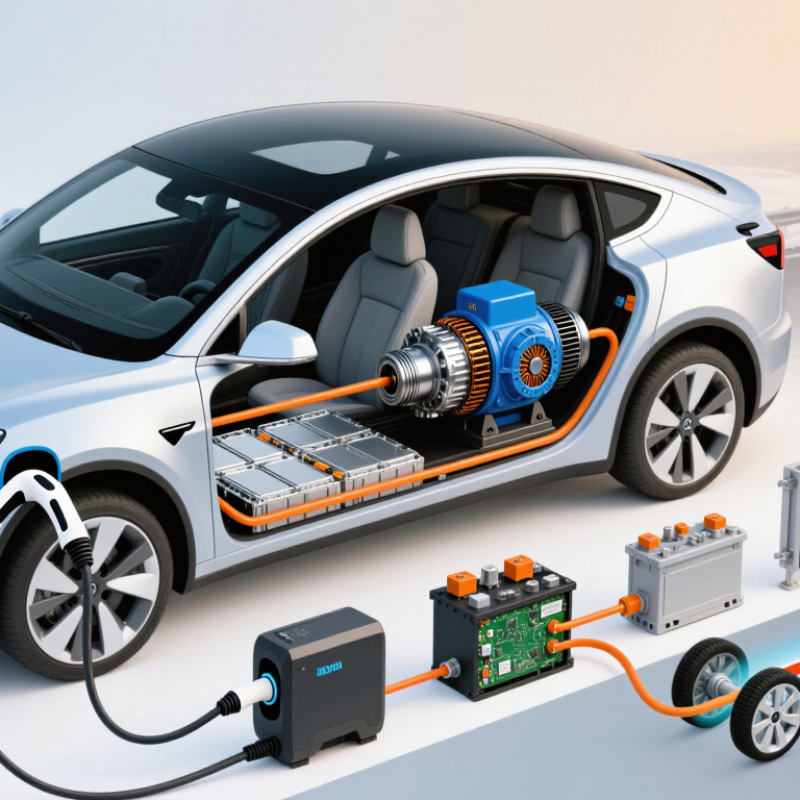
In 2026, electric vehicles are no longer defined by their batteries alone. Buyers, technicians, and fleet managers need to understand how every major system works together. The question “what are electric vehicle components” covers far more than a motor and charging cable. It includes the battery pack, battery management system, inverter, electric motor, onboard charger, thermal controls, sensors, software, and high-voltage safety equipment.

The battery pack stores energy, while the battery management system monitors voltage, temperature, and cell balance. A small temperature difference between cells can affect performance and service life. The inverter converts battery power into controlled current for the motor. Meanwhile, the motor turns electrical energy into wheel torque, often through a compact e-axle. Many modern vehicles also use regenerative braking, which sends energy back to the battery during deceleration.

Charging hardware deserves equal attention. The charge port, onboard charger, DC fast-charging interface, and cooling circuits determine how quickly an EV can recover range. Thermal management keeps the battery, inverter, and cabin within safe operating temperatures. That matters on a freezing morning or during a long highway climb.

This guide examines these components using practical engineering principles and current industry terminology. It considers efficiency, durability, repair access, safety, and real-world driving conditions. Standards and manufacturer specifications remain important references, but they do not tell the whole story. A neat component list can mislead. Integration is the difficult part. Some designs still involve trade-offs between cost, range, performance, and recyclability. Understanding those compromises helps readers evaluate EV technology with clearer expectations.
2026 Best Electric Vehicle Components What Are They?

Electric Vehicle Components: Definition and Core Functions

Electric vehicle components are the hardware and software systems that store, convert, control, and deliver electrical energy. The battery pack stores energy in cells, while the battery management system monitors voltage, temperature, and charge balance. It is the control center. The traction motor converts electricity into wheel movement. An inverter changes battery current into the form the motor needs, while regenerative braking sends part of the braking energy back to the battery.

The International Energy Agency’s Global EV Outlook 2025 reports that electric car sales exceeded 17 million worldwide in 2024, passing 20% of total car sales. This growth increases pressure on component reliability, thermal safety, and repairability. The charging port, onboard charger, and DC charging hardware manage energy entering the vehicle. Cooling plates, pumps, sensors, and heat-transfer fluids protect the battery and power electronics during fast charging or heavy traffic. Small parts matter here.

In practical inspections, connectors and temperature sensors can reveal problems before performance drops. Yet component quality alone does not guarantee efficiency. Software calibration, wiring layout, and heat management also shape real-world range. The U.S. Department of Energy notes that auxiliary loads, including cabin heating and cooling, can significantly affect electric vehicle energy use. A common weakness remains cold-weather performance. Laboratory figures may look precise, but daily driving is less cooperative. Conditions vary.

2026 Best Electric Vehicle Components: Definition and Core Functions

Electric vehicles rely on several high-efficiency electrical and mechanical components. The chart shows representative typical operating efficiencies for major EV powertrain components under normal operating conditions. Actual performance varies with load, temperature, voltage, and operating strategy.

Key insight: The inverter, DC-DC converter, onboard charger, and traction battery are generally designed to operate above 90% efficiency, while motor efficiency varies more significantly with speed and torque.

Battery Pack, Cells, and Battery Management Systems

The most important electric vehicle components in 2026 remain the battery pack, individual cells, and battery management system (BMS). The battery pack stores energy, but its performance depends on thousands of tightly matched cells. According to the International Energy Agency’s Global EV Outlook 2025, electric vehicle battery demand approached 1 terawatt-hour in 2024. That scale makes cell quality, thermal control, and material consistency critical.

Cells provide the energy. Packs provide structure and protection. A BMS measures cell voltage, temperature, current, and state of charge during every drive. It can detect an overheating cell before damage spreads, although no software can replace sound mechanical design.

BloombergNEF’s 2024 Battery Price Survey reported an average lithium-ion pack price of 115 dollars per kilowatt-hour, a 20% annual decline. Lower prices help adoption, but cheaper hardware may create compromises in cooling paths, seals, or service access.

Small details matter. A loose busbar can increase resistance and heat. Uneven cell balance can reduce usable range. During practical inspection, technicians should check sensor readings, insulation, cooling plates, and crash protection together. A strong BMS needs accurate sensors and reliable software logic. It also needs clear fault records. That part is often overlooked. Industry testing under standards such as ISO 26262 and UNECE R100 supports safer development, but real-world durability still deserves more transparent long-term data.

Electric Motors, Inverters, and Power Electronics

In 2026, electric vehicle performance depends on three tightly connected systems: the motor, inverter, and wider power electronics. The motor converts electrical energy into wheel torque through permanent-magnet or induction designs. During testing, engineers monitor temperature, vibration, and acoustic noise under repeated acceleration. Small losses become noticeable. A motor that feels powerful on a short drive may struggle during sustained highway use.

The inverter acts as the electrical translator. It changes battery direct current into controlled three-phase alternating current for the motor. Fast-switching semiconductor devices improve response, but they also create heat and electromagnetic interference. A practical design needs cooling plates, short current paths, insulated busbars, and careful software calibration. Measured efficiency should include real traffic, not only laboratory peaks. This distinction is easy to overlook.

Power electronics also manage onboard charging, DC conversion, regenerative braking, and high-voltage safety. Sensors monitor current, voltage, insulation, and temperature several times each second. In service work, clean connectors and correct tightening matter as much as advanced circuitry. Impressive efficiency figures can lose meaning when winter heating loads are ignored. That gap deserves more honest reporting. Future systems may become lighter and faster, yet repairability remains an unresolved engineering trade-off. Engineers should publish thermal limits, test conditions, and degradation data clearly.

Charging Systems, Thermal Management, and Energy Control

The best electric vehicle components in 2026 will center on charging systems, thermal management, and energy control. The IEA Global EV Outlook 2024 reported over 14 million electric cars sold worldwide in 2023. It also recorded nearly four million public charging points by year-end. This growth increases pressure on hardware reliability, installation quality, and grid coordination.

Charging systems must deliver power safely across homes, workplaces, and highways. High-power charging shortens waiting time, but it also creates heat inside cables, connectors, and battery cells. Liquid cooling can remove this heat more consistently than passive airflow. The U.S. Department of Energy notes that charging efficiency depends on equipment, temperature, and battery condition. Small losses become expensive across millions of charging sessions. That detail is often ignored.

Energy control software connects the battery, charger, motor, and thermal system. It can reduce charging power during peak demand and protect cells in cold weather. The battery may accept less energy at low temperatures. Real-world testing matters here. Laboratory results rarely show rain, dust, aging, or repeated fast charging. Engineers should measure efficiency over seasons, not one perfect day. Data also remains incomplete across regions, so some 2026 performance claims deserve careful review.

2026 Best Electric Vehicle Components: Charging Systems, Thermal Management, and Energy Control
System Area Key Component Primary Function Typical Technical Range or Standard Why It Matters in 2026 Main Benefits Important Design Considerations
Charging Systems High-Voltage Traction Battery Stores electrical energy and supplies power to the traction inverter and electric motor. Approximately 400–900 V nominal system architecture; usable capacity commonly about 40–120 kWh in passenger vehicles. Higher-voltage platforms can reduce current for the same power level, helping lower cable losses and support faster charging. Longer driving range, lower resistive losses, and improved compatibility with high-power charging. Cell safety, pack crash protection, state-of-charge control, serviceability, weight, and end-of-life recycling.
Charging Systems Battery Management System Monitors cell voltage, temperature, current, state of charge, and state of health while balancing cells and controlling safety limits. Cell-voltage measurement commonly uses millivolt-level resolution; balancing may be passive or active. Accurate battery data is essential for safe fast charging, warranty management, range prediction, and battery-life optimization. Improved safety, consistent cell utilization, better charging accuracy, and early fault detection. Measurement accuracy, cybersecurity, isolation monitoring, thermal data coverage, software validation, and redundant protection.
Charging Systems On-Board Charger Converts alternating-current electricity from the grid into direct current for the high-voltage battery. Common passenger-vehicle ratings are approximately 7.4–22 kW AC, depending on vehicle and electrical supply. Efficient AC charging remains important for homes, workplaces, apartments, and destinations where high-power DC charging is unavailable. Convenient overnight charging, compatibility with public AC stations, and support for scheduled charging. Conversion efficiency, power factor, electromagnetic compatibility, cooling requirements, and grid connection limits.
Charging Systems DC Fast-Charging Interface Receives direct current from an external charging station while the station manages most AC-to-DC conversion. Vehicle charging power can range from roughly 50 kW to more than 300 kW; actual power varies with battery temperature and state of charge. High-power charging reduces stopping time and supports long-distance travel and commercial fleet operation. Shorter charging sessions and improved fleet utilization. Battery temperature, connector heating, cable size, charging-curve control, grid capacity, and infrastructure availability.
Charging Systems Charging Inlet and High-Voltage Contactors Connects the vehicle safely to external power and electrically isolates the battery during faults, crashes, or maintenance. Designed for high voltage and current; contactor ratings depend on the vehicle architecture and charging power. Reliable switching and isolation are fundamental to preventing arcing, thermal damage, and unsafe energized circuits. Electrical safety, controlled power flow, and easier fault isolation. Sealing against water and dust, contact resistance, pre-charge sequencing, arc suppression, and mechanical durability.
Charging Systems Bidirectional Charging Hardware Allows energy to move from the vehicle to a building, electrical grid, or selected loads when supported by the vehicle and charger. Power levels vary widely; residential systems are commonly in the several-kilowatt range. Bidirectional operation can support backup power, load shifting, renewable-energy use, and grid-support services. Greater energy flexibility and potential reduction of electricity costs. Interconnection rules, battery degradation, communication protocols, anti-islanding protection, and utility approval.
Charging Systems Charge-Control Communication Module Exchanges charging limits, authentication data, energy measurements, and operating status between the vehicle and charging equipment. May support internationally recognized AC and DC charging communication protocols, depending on market and vehicle design. Smart communication enables dynamic power control, payment functions, scheduled charging, and bidirectional-energy coordination. Improved interoperability, charging reliability, and energy-management capability. Protocol compatibility, software updates, cybersecurity, privacy, and communication fault handling.
Thermal Management Battery Coolant Circuit Transfers heat away from battery cells and distributes heat during cold-weather operation. Typical liquid-cooling systems use a water-glycol mixture and actively regulate battery temperature within a controlled operating window. Temperature uniformity directly affects fast-charging performance, power output, safety, and battery aging. More consistent cell performance and better charging repeatability. Flow distribution, coolant compatibility, leak prevention, electrical isolation, pump efficiency, and maintenance.
Thermal Management Battery Cold Plates or Cooling Channels Provides a heat-transfer path between battery cells or modules and the liquid coolant loop. Aluminum or aluminum-alloy plates and formed channels are widely used because of their thermal conductivity and low mass. Effective heat spreading helps prevent local hot spots during high-power driving and fast charging. Improved temperature uniformity, charging capability, and pack durability. Contact resistance, manufacturing tolerances, pressure drop, corrosion resistance, crash behavior, and repair access.
Thermal Management Heat Pump System Moves heat between the cabin, battery, motor, inverter, and outside environment instead of relying only on resistive heating. Coefficient of performance is generally greater than 1 under suitable conditions, although it decreases in very cold weather. Efficient heating can preserve more battery energy for driving in cold climates. Improved winter efficiency, greater cabin comfort, and reduced auxiliary electrical load. Refrigerant selection, low-temperature performance, defrost operation, noise, cost, and system complexity.
Thermal Management Electric Coolant Pump Circulates coolant through the battery, power electronics, motor, and heat exchangers. Variable-speed operation allows flow to match thermal demand and reduce parasitic energy use. Independent electric pumping supports flexible thermal control even when the traction motor is not running. Precise temperature control, lower energy consumption, and modular system design. Reliability, flow sensing, electrical efficiency, cavitation resistance, noise, and fail-safe operation.
Thermal Management Refrigerant-to-Coolant Chiller Uses the air-conditioning refrigerant circuit to remove heat from the battery coolant loop. Can provide active battery cooling when ambient air is too warm or when charging generates substantial heat. Supports high-power charging and stable battery operation in hot weather. Fast heat rejection and improved battery temperature control. Refrigerant pressure, energy consumption, condensation control, packaging space, and service requirements.
Thermal Management Power-Electronics Cooling Module Removes heat from the traction inverter, DC-DC converter, and other high-power semiconductor devices. Liquid-cooled designs are common in high-power systems because semiconductor losses can rise rapidly under heavy load. Efficient cooling enables compact power electronics and sustained acceleration without thermal derating. Higher continuous power, improved component life, and stable electrical efficiency. Thermal interface materials, pressure drop, insulation, switching losses, and hot-spot management.
Energy Control Traction Inverter Converts battery direct current into controlled three-phase alternating current for the traction motor and converts regenerative energy back to direct current. Silicon-carbide switching devices can support high switching frequency and reduced losses in suitable applications. Inverter efficiency has a direct effect on vehicle range, acceleration, regenerative braking, and thermal load. High efficiency, precise torque control, and improved packaging potential. Semiconductor cost, electromagnetic interference, cooling, switching strategy, insulation, and reliability.
Energy Control DC-DC Converter Converts high-voltage battery power to the low-voltage electrical system used by lighting, control units, sensors, and safety equipment. Common output systems include approximately 12 V; some newer vehicle architectures use higher low-voltage levels. Efficient low-voltage power conversion reduces auxiliary losses and supports modern electronic functions. Stable electrical supply, reduced alternator-type losses, and reliable operation of safety systems. Output regulation, galvanic isolation, peak load response, efficiency, cooling, and redundancy for critical loads.
Energy Control Regenerative Braking Controller Coordinates motor-generated braking torque with hydraulic friction brakes and battery acceptance limits. Regeneration is limited by battery state of charge, temperature, tire grip, motor speed, and requested deceleration. Recovering kinetic energy can reduce energy consumption, especially in urban driving and repeated stop-and-go conditions. Improved efficiency, reduced brake wear, and smoother one-pedal driving behavior. Brake-pedal feel, traction control, low-temperature operation, battery limits, and safety redundancy.
Energy Control Vehicle Energy Management Controller Optimizes power distribution among the battery, motor, inverter, thermal systems, charging equipment, and auxiliary loads. Uses real-time measurements of speed, torque demand, temperature, state of charge, and available charging power. Integrated control can balance performance, range, fast charging, comfort, and component protection. Better range prediction, reduced energy waste, and coordinated system operation. Control-model accuracy, software safety, cybersecurity, sensor quality, update management, and fault response.
Energy Control High-Voltage Fuse and Pyrotechnic Disconnect Interrupts high-voltage current during severe faults, collisions, short circuits, or maintenance events. Protection is selected according to battery voltage, prospective fault current, and vehicle safety architecture. Rapid electrical isolation reduces the risk of fire, electric shock, and damage after a critical event. Enhanced crash safety and controlled protection of high-voltage components. Interrupt speed, coordination with contactors, replacement requirements, diagnostic monitoring, and packaging.
Energy Control Battery State Estimation Software Calculates state of charge, available power, remaining energy, battery aging, and charging capability from sensor data. Combines current integration with voltage, temperature, impedance, and model-based estimation methods. Accurate estimation improves range displays, charging time predictions, safety margins, and battery warranty decisions. More trustworthy range information and better utilization of available battery capacity. Sensor drift, cell variation, temperature effects, software validation, data logging, and cybersecurity.
Energy Control Smart Charging Scheduler Determines when and how quickly to charge based on departure time, energy need, electricity tariffs, battery temperature, and grid conditions. Can use time-of-use pricing, renewable-energy availability, charging-current limits, and user-defined schedules. Managed charging reduces peak demand and can lower operating costs without requiring larger vehicle batteries. Lower charging costs, reduced grid stress, and improved battery-charge planning. User experience, connectivity reliability, tariff accuracy, privacy, cybersecurity, and compatibility with charging equipment.
Energy Control Energy Recovery and Auxiliary-Load Monitor Measures energy used by propulsion, heating, cooling, lighting, infotainment, pumps, and other auxiliary systems. Separates energy consumption into operating categories to support efficiency analysis and range estimation. Transparent energy data helps identify avoidable losses and improves real-world efficiency under changing conditions. Better diagnostics, driver feedback, range accuracy, and fleet energy management. Measurement calibration, data resolution, software integration, display clarity, and protection of user data.

Safety, Connectivity, and Emerging EV Component Technologies

Electric vehicle components in 2026 will focus heavily on safety, connectivity, and practical reliability. Battery packs may use pressure sensors, temperature probes, and cell-level monitoring to detect abnormal changes early. A fast-acting disconnect can separate the high-voltage system after a serious collision. Insulation monitoring also helps identify dangerous leakage before it becomes a larger fault.

Safety depends on more than hardware. Electronic control units need secure software, verified updates, and clear diagnostic records. Vehicle-to-everything connectivity can share warnings about sudden braking, road hazards, or charging conditions. However, connected functions should collect limited data and protect it through strong authentication. Following functional safety and cybersecurity principles remains essential, not optional.

Emerging components include silicon-carbide inverters, bidirectional charging modules, solid-state battery cells, and centralized computing units. These technologies may reduce energy loss, improve charging flexibility, and simplify vehicle wiring. Still, laboratory results can appear better than daily performance. Cold weather, vibration, dust, and repeated fast charging reveal weaknesses. I would not treat every prototype as ready for mass production. A cheaper sensor with clearer maintenance data may sometimes support safer ownership than a sophisticated component that technicians cannot easily inspect. Real roads are less forgiving.

FAQS

What are the main electric vehicle components in 2026?

The key components are battery cells, the battery pack, and the battery management system. Charging hardware, thermal controls, motors, and energy software also matter.

What does the battery management system do?

It monitors cell voltage, temperature, current, and charge levels during driving. It can detect overheating early, but software cannot fix weak mechanical design.

Why must battery cells be closely matched?

Uneven cells can reduce usable range and increase heat. A poorly balanced pack may feel weaker after repeated charging.

What should technicians inspect inside a battery pack?

They should check sensors, insulation, cooling plates, seals, busbars, and crash protection. A loose busbar can create resistance and local heat.

Does cheaper battery hardware always provide better value?

Lower prices can support wider adoption, but savings may affect cooling paths, seals, or repair access. Cheap is not automatically efficient.

Why is thermal management important during fast charging?

Fast charging creates heat in cables, connectors, and cells. Liquid cooling usually removes heat more consistently than passive airflow.

How does cold weather affect charging?

Cold batteries may accept energy more slowly. Energy control software can reduce charging power and protect cells during low temperatures.

Can laboratory charging results predict everyday performance?

Not completely. Rain, dust, aging, and repeated fast charging create conditions that clean laboratory tests may miss.

How can energy control software improve charging efficiency?

It connects the battery, charger, motor, and thermal system. It can reduce power during grid peaks, though real-world data remains incomplete.

What information is still missing about long-term battery reliability?

More transparent data is needed across seasons, climates, and charging habits. Some performance claims may look precise, but the evidence can be thin.

Conclusion

Electric vehicle components are the essential systems that generate, store, control, and deliver electrical power for vehicle movement. This overview explains what are electric vehicle components, beginning with the battery pack, individual cells, and battery management system, which work together to store energy, monitor performance, balance cell conditions, and support safe operation. It also covers electric motors, inverters, and power electronics, which convert electrical energy into controlled mechanical power and help improve efficiency.

Additional sections examine charging systems, thermal management, and energy control, all of which influence charging speed, battery life, driving performance, and overall reliability. Safety equipment, connectivity features, sensors, and control units are also important for monitoring vehicle conditions and supporting intelligent operation. Finally, emerging component technologies are introduced, including more efficient energy storage, advanced power control, improved cooling solutions, and smarter vehicle communication systems. Together, these components form an integrated platform that enables cleaner, quieter, safer, and more efficient transportation.

Henry

Henry

Henry is a dedicated marketing professional with a profound expertise in the company's offerings. With years of experience in the industry, he possesses an impressive understanding of the market dynamics and consumer behaviors that drive success. Henry is committed to sharing his insights through......